
Planning to stay active this summer? With the sun (hopefully) shining out there, sunglasses are a must. After all, sun damage is no joke, and sunglasses are such a simple way to protect yourself (providing they have UV protection).
Regular sunglasses are well-suited for everyday activities or peaceful strolls. But what about if you’re doing something more strenuous? Sports like running, cycling, team sports, or even skiing might require something a little more robust. Sunglasses designed for sports pair sun protection with a design built for movement, durability, and long-wear comfort in mind. The question is: are sports sunglasses worth it?
Let’s look at how sports sunglasses compare to your average pair.
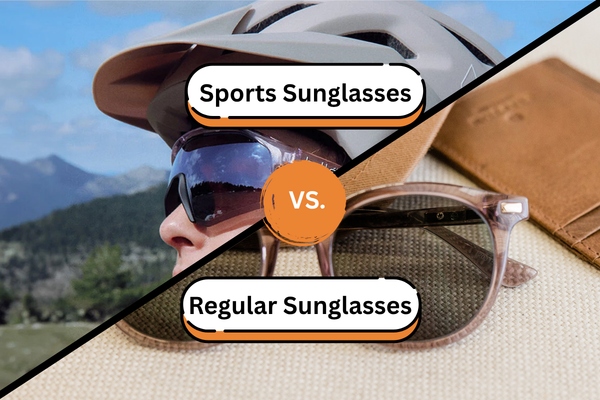
The pros of sports sunglasses
If we sum up the top advantage of sports sunglasses, it’s this: they’re designed for movement.
On the surface, they look more or less like normal sunglasses. But there are some key differences that make them more suitable and comfortable for sports, as well as potentially improving your game.
That’s not to say that regular sunglasses are bad or that you can’t wear them for sports. Some also come with some of the features we’re going to talk about below.
But in general, the advantages of sports sunglasses include:
Ventilation features that prevent fogging
Glasses fogging up is pretty common when exercising – and pretty annoying too. Prescription lens wearers will know that one well.
The good news is that with sports sunglasses, you get the benefit of ventilation slots that increase airflow behind the lenses and prevent fogging.
Grips to avoid slipping
One of the biggest pet peeves of wearing sunglasses during sports is that they’re prone to slipping and bouncing around. There’s nothing more distracting than a pair of sunglasses bouncing on your nose while you’re trying to run.
Sports sunglasses usually come with grips around the nose and temple to keep them in place, even during movement or moisture. With better stability, you have fewer distractions to contend with.
Sports-specific lens tints
Sunglasses come in lots of different lens tints. But for sports sunglasses, there’s often a wider range to choose from besides classic grey or brown.
Sports sunglasses come in shades like yellow, green, purple, pink, and blue. It’s not just about personal preference.
Each lens tint has pros and cons when used in different sports. Some boost clarity or contrast, others are better in low light, some are ideal for field sports like cricket or golf.
Others are great for water-based sports or fishing.
While many pick a good all-round tint like grey or brown, you might prefer something a bit more niche, like yellow for low-light skiing, for example.
Greater protection from the elements

Most sunglasses only protect you from one direction – straight on. But if you’re performing sports with lots of twists and turns or particularly windy conditions, then you’ll want better protection from the sides.
One type of sports sunglasses works especially well here – wraparound frames.
Wraparound frames curve slightly at the sides, shielding your eyes from the sides and leaving them fully protected from the wind, debris and sun from different angles.
Greater range of lens tech options
Lens technology has come a long way in the sunglasses and prescription lenses worlds. Many modern sunglasses brands allow you to customise your lenses nowadays, so you can go for prescription, photochromic, or polarised lenses.
However, many sports sunglasses have technologies like these built in, especially polarisation, which helps to reduce glare and enhance clarity – making them ideal for outdoor sports.
Other less-common technologies that most regular glasses don’t come with as standard include hydrophobic and anti-reflection coatings, which aren’t always needed for day-to-day wear but can be handy for sports.
Impact resistance
Dropping your sunglasses, hitting branches on a nature trail or wind-propelled debris are all just part of exercising outside.
Regular sunglasses aren’t built for these types of impact, but sports sunglasses are more likely to come with a degree of impact resistance.
Wiley X is a great example of a brand that takes this to another level with its protective sunglasses built for more extreme activities. Wiley X sunglasses come with their bespoke shatterproof, scratch-resistant lenses and always meet or exceed safety ratings set by the American National Standards Institute (ANSI).
Weight and comfort
When you’re wearing sunglasses for long periods of time or during lots of movement, you don’t want a heavy pair weighing you down. After a while, it just becomes uncomfortable and distracting.
There are lots of different materials for sunglasses to choose from, from weightier but cheaper metals to light and thin, but expensive options like titanium. Sports sunglasses designers always aim to make their glasses as light weight as possible to improve comfort during long wearing sessions.
So, are sports sunglasses worth it?
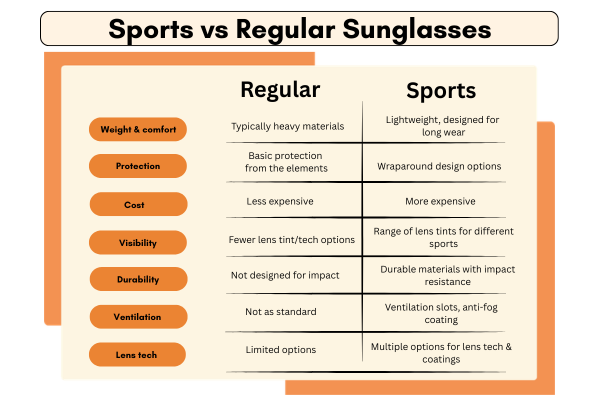
We are a little bit team sports sunglasses here, of course. But in the interests of balance, regular sunglasses do have an advantage – cost.
Regular sunglasses can come at pretty much any price point. You can pick up a cheap pair on the high street or a custom lens and titanium frame from the higher end of the market. There are also many more options out there so you can find a style that matches your face shape and personal taste much more easily.
Plus, you probably already own a pair somewhere that you can use for sports too. You might not need to buy a new pair at all. But if you’ve found them uncomfortable or they’re prone to slipping or bouncing, we’d recommend getting a pair of sports sunglasses for all the reasons above.
In the sports sunglasses world, things are a little more limited. There are certainly cheaper no-brand options that are suitable for sports. The thing to watch out for is whether those cheaper options offer a good amount of protection. On the other hand, a trusted brand might set you back more. But you get a guarantee of quality, comfort, protection, and great design.
With more robust designs, greater choice of shape, design, lens tints and technologies, and lighter weight frames, you’ll find they’re much better suited for physical activity than normal sunglasses.