
With new technologies and multiple options on the market, how do you know which pair of sunglasses is right for you? In this sports sunglasses glossary, we cover some of the most commonly used terms to make sure you find the right option for you.
A
Acetate: A bioplastic material made from cotton or wood that acts as biodegradable material for sunglasses frames.
Acuity: Clarity of vision.
ADD/Addition: On prescriptions, ADD is short for Addition, which often refers to presbyopia or age-related vision loss. ADD is how much additional help you need to see things at close distances such as when reading.
Anti-fog coating: A coating that prevents lens from fogging up in changing temperatures or during exercise. Some glasses come with this built in, but it can also be applied as a spray to temporarily eliminate fogging.
Anti-scratch coating: A coating that boosts abrasion resistance and prevents glasses rom scuffs and scratches.
Anti-reflective coating: A coating that reduces light, reflections, and glare passing through the lens.
Astigmatism: A common eye condition that can cause blurry vision and headaches due to the shape of your eye. Prescription glasses or contact lenses may have a CYL number to correct this.
Axis: A prescription number that represents the necessary angle for cylindrical power to correct astigmatism. The number will be between 1 to 180, with 90 referring to the vertical position and 180, the horizontal.
Learn more: How to Read Your Glasses Prescription
C
Cataracts: A common age-related eye condition that causes the lens in your eye to become clouded. While age-related, sun damage over time can contribute to developing cataracts in later life.
Clip-on lenses: Frames that you can clip different lens on. For example, you may have clear prescription glasses with an additional sunglasses clip-on, or sunglasses with different lens tints options.
CR39: A thermoplastic used for making lenses which offers good scratch resistance, optical clarity, and durability. They’re lightweight lenses that also work with prescriptions.
CYL/Cylinder: If you have astigmatism, CYL stands for the amount of lens power you need to correct it. This number indicates how your eyes are shaped if they’re not perfectly round.
F
Full-rim glasses: Glasses with frames that fully encircle the lens.
Learn more: What’s the Best Style of Sunglasses for Sports?
G
Gradient lenses: Lenses that have a tint that gradually moves from darker to lighter towards the bottom of the lenses. Typically a fashion choice, gradient lenses also offer better overhead protection from the sun with a clearer, unobstructed view while looking down.
H
Half-rim glasses: Sunglasses frames that only cover the top part of the lens, leaving a rimless bottom, which allows for better downward vision.
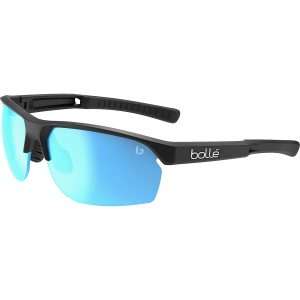
Hydrophobic coating: A coating that prevents water from sticking to glasses. It’s ideal for rainy days, fishing, or sailing.
I
Interchangeable lenses: Lenses that can be switched out for different tints or coatings. This offers an all-in-one alternative to switching between glasses for different conditions or sports.
L
Lens tint: The colour of your lenses, which affects vision clarity, colour perception, contrast, and light reduction. Sunglasses come in a range of tints, including brown, grey, yellow, rose, and more.
Learn more: How to Pick the Best Sunglasses Tint for Sports
M
Mineral glass: A type of lens material that offers some of the best optical quality and clarity for wearers. Mineral glass is also highly durable and resistant to scratches and impact.
Mirrored lenses: Lenses with a mirrored exterior. Usually chosen for style, mirrored lenses also help to fight glare, reduce light passing through, and give a degree of privacy for the wearer.
N
Nose pads: Rubber or plastic pads that sit on the bridge of your nose when wearing glasses. These pads help to reduce movement and slipping – making them ideal for exercise.
O
Oleophobic coating: Oleophobic coatings help to prevent smudges on lenses by creating an oil-resistant surface.
P
Photochromic lenses: Also called transition lenses, this lens type automatically adjusts the level of opacity. They become lighter and clear in darker conditions such as being indoors and darken when stepping into sunshine. They’re popular with prescription glasses wearers who don’t want to switch between regular glasses and sunglasses.
Polarised lenses: Lenses that are designed to reduce glare when wearing sunglasses. This helps with comfort and reduces fatigue and eye strain.
Polycarbonate: Polycarbonate lenses are impact-resistant, lightweight and block 100% of UV rays, making them a popular option for sunglasses.
Prism: When your eyes aren’t working well together as a pair, you may need prismatic correction in your prescription. This number refers to the correction needed.
PD/Pupillary distance: The distance between the centre of your pupils, which you’ll need if you’re buying prescription sunglasses online.
Learn more: Polarised vs. Non-Polarised Sunglasses: Which is Best?
S
SPH/Sphere: The number on a prescription that refers to the power of a lens needed to correct your eyesight. This may be different for each eye. A ‘+’ next to the number means you struggle to see things up close, whereas a ‘–‘ shows you struggle with distance.
T
Temple grips: Rubber or plastic grips that sit at your temples to improve grip and stability. They are most commonly found in sports sunglasses where physical activity could cause frames to bounce or slide around.
Trivex: A highly durable and lightweight plastic material for lenses. Trivex lenses are often used in safety glasses and sports goggles and glasses. This material was originally designed for use in the military for windows and later for glasses.
TR-90: A thermoplastic used in glasses and sunglasses frames for its flexibility and durability. It’s a lightweight material that provides greater comfort than heavier materials like steel.
Learn more: What’s the Best Sunglasses Frame Material?
U
UV40/UV400: In Europe, sunglasses must have sufficient protection from UV rays. This may look like 100% UV protection, UV40 or UV400. UV400 sunglasses block light waves up to 400 nanometres with a special coating, essentially blocking 99-100% of harmful UVA and UVB rays. UV light has wavelengths between 100nm to 400nm, so UV400 is the best possible protection for your eyes and a must when shopping for sunglasses.
W
Wraparound sunglasses: A frame style that offers greater protection at the sides of your eyes, protecting them from wind, rain, debris and sunlight. They a popular option for sports sunglasses, particularly cyclists, runners, and skiers.
Browse our sports sunglasses collection today to find your perfect pair. Any questions? Check out our FAQs page today.