Shopping for sunglasses these days has come a long way from being a simple choice between metal or plastic frames. Today, you’ll see sunglasses frame materials like acetate or TR-90 or even bio-based materials. New technologies and designs have transformed sunglasses from a basic accessory to an essential part of sportswear.
Modern sports sunglasses are designed to be durable, flexible, adjustable, and weigh as little as possible to make sure they’re suitable for various sports. But is there really a difference between sunglasses frame materials? Can they really impact your performance as well as comfort?
Like anything, each type of frame material has its fair share of pros and cons. To help you pick the pair that’s right for you, let’s look at how they compare below.
What to look for in sunglasses frames
Weight
Glasses sitting too heavy on your face, leaving red marks on your nose even hours later might make you tempted to leave them behind the next time you practice. But if you want to keep on protecting your eyes, you need a pair that’s comfortable and lightweight enough for long-term wear.
Comfort
While you’ll want to choose lightweight materials for the most comfortable frames, also consider the shape of the frames – how well they sit, and whether you’ll be wearing them with helmets or hats.
Price
Frame material also has a big impact on the price you pay. Cheaper materials, like metal or plastic, are popular with fashion brands because they’re more affordable. But they’re not always as robust for sports. On the other hand, materials like TR-90 or titanium offer great durability but you might have to fork out more for them.
Durability
If you’re into extreme sports, this will be a big consideration. Can this pair of sunglasses take a fall? How will it stand up against branches or debris on a mountain biking route? You don’t want a pair that’s going to scratch easily or break, and some frames will be more durable than others.
Adjustability
Most regular sunglasses don’t offer much in the way of adjustability, but sports sunglasses are more likely to give you something to work with. You may be able to adjust the grips or even the lens tint, but only certain frames come with built-in adjustability.
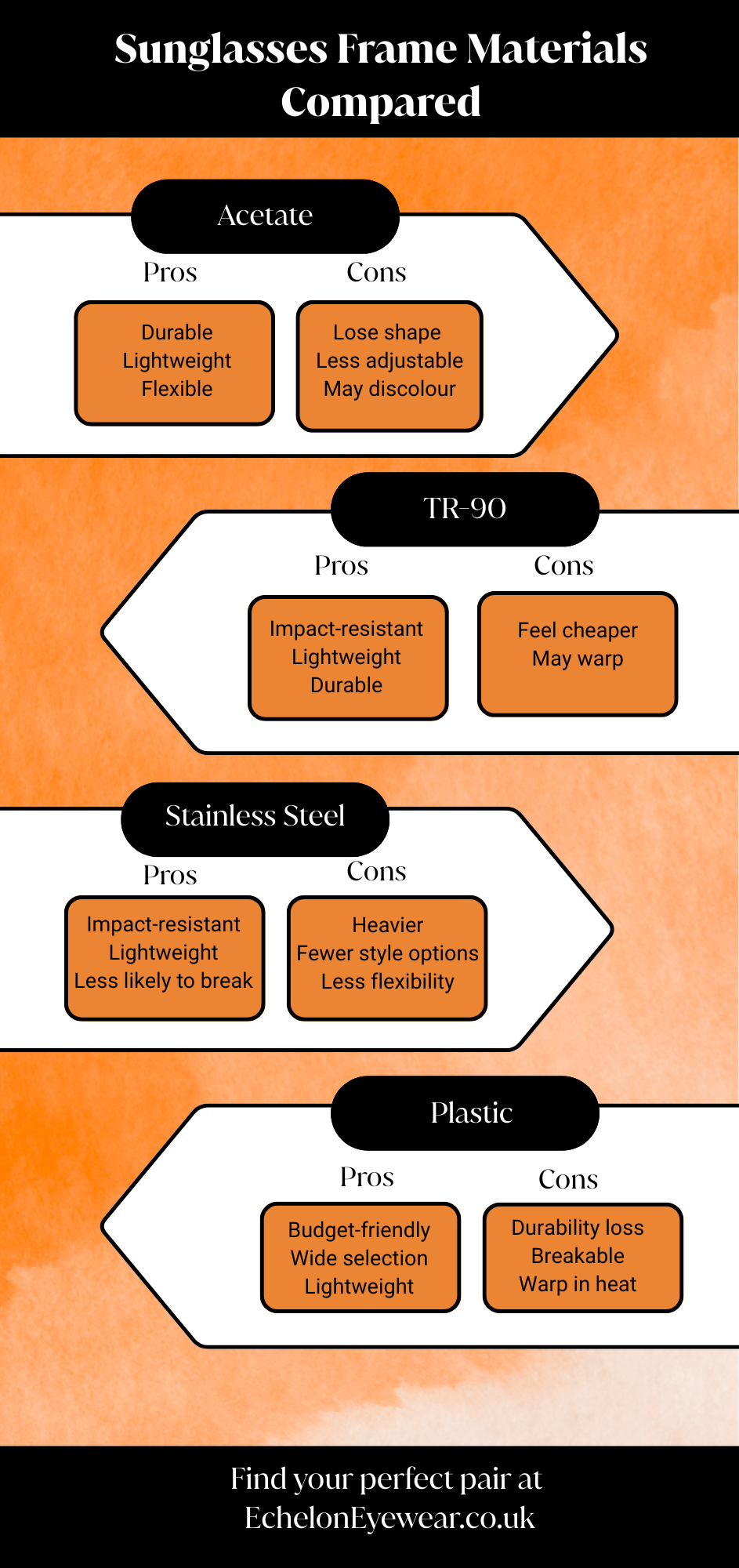
Sunglasses frame materials compared
Bearing all that in mind, which material is the best? Let’s look at the pros and cons of the most common materials you’ll find on the market.
Acetate sunglasses frames
Acetate is a plant-based type of plastic made from natural cotton and wood. You might think plant-based glasses frames are a novelty or they won’t stand up to more than a gentle walk outside, but you’d be surprised…
Developed during the 1940s, acetate was used in glasses frames for its durability and flexibility. Since, then it’s remained a popular material used by lots of different brands to make high-quality sunglasses frames.
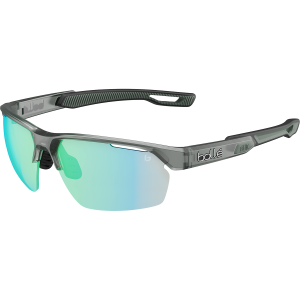
Pros
- More durable and flexible when compared to regular plastic
- Lightweight material
- Great for those with allergies to metal
Cons
- Can lose shape over time (especially in drastically changing temperatures)
- Usually less adjustable around the nose area
- Can discolour when in contact with harsh cleaners
Titanium sunglasses frames
Titanium frames are some of the lightest and thinnest types of sunglasses you’ll find on the market. As it’s an extremely strong material, titanium frames can afford to have more understated and smaller designs, making them a great style option for some.
Pros
- Durable
- Lightweight
- Resistant to rust and corrosion
- Adjustable for a custom fit
Cons
- More prone to scratches or dents than other materials
- Can feel flimsy due to their thin, lightweight design
- Heat retention can make them uncomfortable in hotter weather
- Usually more expensive
Plastic sunglasses frames
Plastic frames come in a range of different styles that won’t break the bank, making them a popular option for many. These frames are typically durable, comfortable, and easy to find because brands typically stock multiple options.
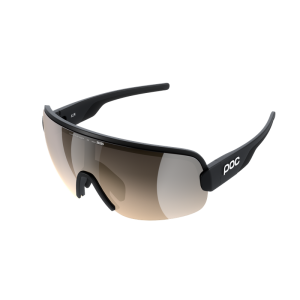
Pros
- Budget-friendly
- Come in a wider range of shapes and colours
- Lightweight
- Available in fashion stores and at major brands
Cons
- Lose their colour and durability over time
- More likely to break
- Can warp in extreme heat
Stainless steel sunglasses frames
Stainless steel sunglasses are hard-wearing and less susceptible to tarnish over time. They offer a good middle ground between durability, price, and comfortable designs that make them a popular choice as a go-to pair of glasses.
Pros
- Durable
- Budget-friendly
- Less like to tarnish or warp over time
- Hypoallergenic
Cons
- Heavier than other metals or plastic frames
- Limited style or colour options
- Less flexible compared to titanium
TR-90 sunglasses frames
TR-90 is a thermoplastic material that’s increased in popularity in the sunglasses market over the past few years. They come in various designs and colours and offer multiple benefits including great comfort, durability, and competitive prices.
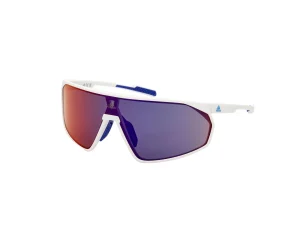
Pros
- Lightweight
- Impact-resistant in a fall
- Flexible under pressure, reduced risk of breaking
Cons
- May feel cheaper than other materials
- Can warp if exposed to extreme heat (e.g. left out in the sun)
Aluminium sunglasses frames
Favoured for its lightweight and flexible nature, aluminium also makes great sunglasses frames. Though isn’t as widely seen on the market as some of the other materials on this list, it’s still a great all-round option for your frames.
Pros
- Lightweight
- Resistant to rust or corrosion
- Flexible and adjustable for a perfect fit
Cons
- Prone to scratches
- Less durable than other metals
- Sometimes uncomfortable in hotter conditions
Don’t overlook sunglasses frame materials when buying
Each of the sunglasses frame materials mentioned above have been used in making sunglasses for a long time now and will serve you well in day-to-day activities and sports. For more intense sports, we’d recommend going for a material that’s known to be hard-wearing, durable, and flexible enough to make it out unscathed in a fall. For something a little less rigorous, like golf or fishing, you’ll be well served with any of the above options.
Either way, don’t overlook this element when shopping for sports sunglasses. Eye protection is vital for comfort and your health when playing sports, and the right frames can help you focus on your performance and have fun at the same time.
Ready to pick your perfect pair? Check out our brands or browse by your sport to find the best sunglasses for you.