
A triathlon is the ultimate feat of endurance. Three sports, stacked on top of each other, each present unique challenges that most mere mortals wouldn’t even attempt. But for serious triathletes intent on victory, protective gear is a must if you want to get to the finish line.
In this post, we’re talking about eye protection specifically. Often an overlooked part of sports gear, protecting your eyes from wind, debris, water, and the sun is a no-brainer if you want to compete at your best.
But with three different sports, how do you pick the right eye protection as a triathlete? Keep reading this guide to find out.
What to consider when looking for triathlon sunglasses and goggles
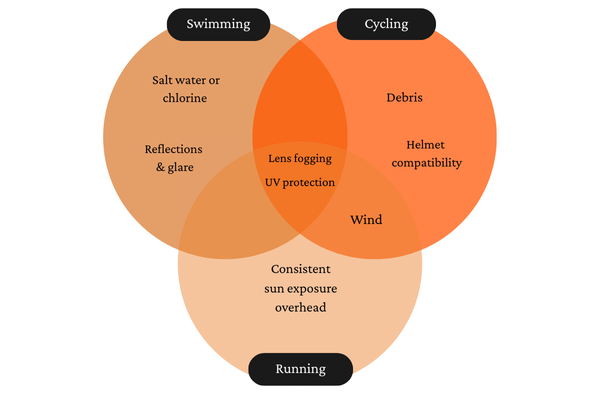
The biggest challenge of a triathlon (aside from the obvious) is switching between each leg of the journey without losing pace. When it comes to eye protection, that means switching from goggles to sunglasses that are suitable for the next two stages of the race. With three different racing types, there are different things to consider when protecting your eyes.
Swimming: You’ll have to think about salt water or chlorine, sun glare bouncing off the water and of course, keeping your vision clear as you’re beginning your first leg.
Cycling: The biggest things to think about are wind while travelling at speed, debris, and changing light conditions as your route takes you through open roads and under tree cover.
Running: At the final leg, you’ll be contending with sustained sun exposure from directly overhead, sweat, bouncing/movement, and the wind.
Part 1: Swimming
Goggles are an essential piece of kit, whether you’re in open water or in a pool. But not all goggles are made equally. The top things every swimmer dreads are fogging and water leakage. If either of these things happen when you’re competing, your performance could suffer. Your pace will likely slow, you’ll be distracted or even stressed – not a great way to begin a triathlon.
On top of that, if you’re swimming in open water, you’ll have sun glare to deal with. If that’s the case, we’d recommend a tinted pair of goggles to keep your vision clear when trying to reach the next buoy.
What to look for in swimming goggles
Tinted lenses
For open water swimming, tinted lenses with UV protection should be a top priority for protecting your eyes from strain and sun damage. Sunlight bouncing off the water can cause some pretty blinding glare that can make it hard to see where you’re going. Extended swimming sessions like in a triathlon will have you straining to see and even lead to headaches or fatigue (well, more than usual).
Polarised lenses
Polarised lenses will help to further cut down glare. They work by reducing horizontal light and reflections and allowing more vertical light to help you see better. Tinted lenses work by reducing all light. So glare is reduced but not eliminated completely.
Mirrored lenses
Usually a bit more affordable than polarised lenses, mirrored lenses work in a similar way by reducing bright light. Rather than specifically targeting horizontal light, these lenses reduce the overall brightness and offer more protection from glare than regular dark-tinted lenses.
Photochromic lenses
Changing light conditions can make picking the perfect tint and lens type a bit tricky. What if the sun suddenly disappears and leaves things a bit gloomy? Photochromic lenses adjust according to the current level of brightness, getting clearer in low-light and darker in sunnier conditions.
Anti-fog coating
This type of coating eliminates condensation inside the goggles that causes them to fog up and block your vision. Most goggles don’t come with this as standard, and you may have to get a spray you can apply as a spray before every swim.
Adjustable straps and nose grips
To avoid leakage, an adjustable strap can help you get a closer fit, while keeping your goggles comfortable.
Leak-proof seals
While all goggles will come with some kind of seal, usually either foam or silicone, not all of them are of equal quality. If you’re looking for a pair of goggles you won’t have to keep taking off and on again, look for trusted brands like Huub, which has tried-and-tested goggles suitable for leisure and competitive swimmers alike.
Transition to the next stage: Cycling
This might be the trickiest bit, and not just because your sodden from your swim – switching to the next stage. Think about where you’ll store your next round of eye protection when you’re swimming so you can quickly change to a suitable pair. You might even want to practice changing your eye protection quickly so you’re ready on race day.
Part 2: Cycling

The cycling stage is the most critical leg to think about eye protection. You are likely travelling at a faster speed, and with that comes the danger of debris and wind.
Naturally, your swimming goggles are probably not what you want to wear for cycling. So you’ll need to think about what type of sunglasses you want to switch to and whether you’ll be wearing them for the last part of your triathlon.
What to look for in cycling sunglasses
Wind protection
One of the most popular ways to protect your eyes from the wind is to use wraparound glasses that cover your eyes from all angles. This style of sunglasses is also great for protecting against sun glare when travelling around winding corners and through different light conditions.
Anti-slip grips
For cycling and running, one of the must have features we’d recommend is anti-slip grips. Regular sunglasses have a habit of bouncing or slipping when you’re moving about, so you’ll want a pair that stays firmly in place on your ride.
Ventilation
Good cycling sunglasses also need some kind of ventilation to prevent fogging. Fogging can quickly become dangerous, especially when travelling at faster speeds, so look for a pair that has good ventilation built into the design.
Photochromic lenses
Lighting conditions can be unpredictable when on a long bike ride, so one option to keep your vision clear is photochromic lenses. These will adjust depending on the lighting on your route. So it can be a good option to consider for cycling or running.
Compatibility with helmets
Don’t overlook this part if you’re shopping for triathlon sunglasses. The last thing you want when you set off is to realise that the frames are digging into your head when you put your helmet on. This can end up distracting and uncomfortable (during an already tough journey!)
Transition to the next stage: Running
The big decision here: do you keep your cycling sunglasses or switch them up? To save time, many triathletes stick with the same pair. But that means you’ll have to consider the challenges awaiting you on both legs of your journey.
If you do choose to switch to another pair, consider where you’ll store them while cycling and whether you can swap glasses quickly enough so that you don’t lose pace.
Part 3: Running
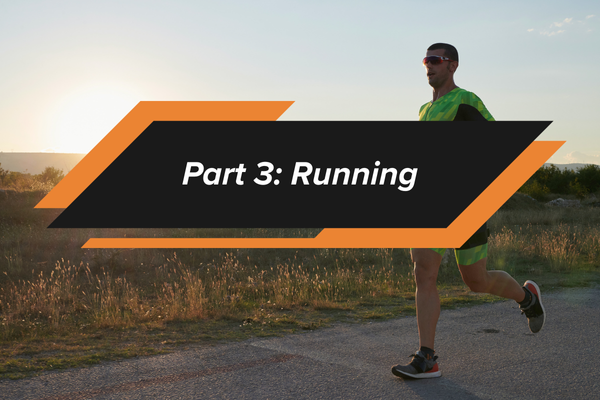
Onto the last leg of your day, when all you can think about is the finish line. Sunglasses are still important here, and many experienced triathletes simply wear the same pair they used for cycling. So whether you want an all-round pair or a running-specific pair, there are a few important things to consider.
What to look for in running sunglasses
Lightweight frames
For a comfortable end to your triathlon, we’d recommend looking for a pair of extra lightweight frames. Not only will that make them more comfortable, but lighter frames are also better for storing away if you need to bring multiple pairs.
Anti-slip grips
Just like with cycling, anti-slip grips are essential when you’re running (perhaps even more so). Increased sweat production and bouncing as your feet hit the floor mean that you’ll need glasses with good (possibly adjustable) nose and temple grips for maximum comfort and stability.
Ventilation
Sunglasses are prone to fogging up when running, so ventilation is essential. Look for ventilation holes around the frames to make sure fog is one less thing to worry about.
Lens tint options for triathletes
The colour of your lenses matters more than just personal preference. Each type of lens tint has its own pros and cons in different sporting scenarios.
Swimming: Most goggles come in a standard grey lens tint to reduce uncomfortable glare from the sun’s reflection on the water. For indoor swimming, blue or clear lenses are usually best. If you’re likely to compete on a gloomier day, you may also want to consider yellow or amber-tinted lenses.
Cycling: Cycling sunglasses usually come in a few more options, but some great picks include grey lenses for sunny conditions, and yellow or rose-coloured lenses in low light.
Running: Popular options for running sunglasses include grey, brown, or yellow, as they’ll be best for clarity and contrast in different lighting.
While the weather can be difficult to predict while you’re training for the big day, consider the time of year you’ll be competing. For example, if competing in the height of summer, opt for tints suitable for bright, sunny conditions.
Common mistakes triathletes make
Sunglasses probably aren’t your biggest priority when waiting for the big day to approach. But to stay safe and comfortable during a triathlon, here are some of the top mistakes to avoid:
Using cheap sunglasses that fog easily
Cheaper fashion sunglasses are less likely to have built-in ventilation that will help with airflow when running or cycling. These glasses could end up fogging up while you need to stay focused, affecting your concentration and even pace.
Neglecting UV protection
If nothing else, prioritise UV protection when picking out your sunglasses. Eye protection is the most important part of any sunglasses purchase. So always make sure the glasses you buy offer full UVA/UVB protection.
Buying sunglasses without grips
One of the best things about sunglasses for sports is that many will have built in grips around the temple and nose to keep them in place. Without these, sunglasses are likely to slip when in contact with sweat and break your concentration. And you might not always have time to safely adjust them (when cycling around corners, for example).
Not practicing eyewear transitions before race day
Whipping out a pair of sunglasses to replace your goggles probably takes just a few seconds. Still, we’d recommend doing a practice run of switching as fast as you can so you don’t lose pace.
Triathlon sunglasses should be an essential piece of your kit
With such a challenging yet rewarding experience, the right triathlon sunglasses won’t just make you more comfortable. They’ll help you stay safe and protected, whether in the water, on a trail or a road.
Investing in a pair of sports sunglasses for triathlons from a reputable brand pays off in improving your performance, comfort, and safety.
Start shopping for triathlon eye protection by checking out our range of swimming goggles and running/cycling sunglasses today.