
A common question we see runners ask is are sunglasses for runners really necessary? It’s hard to imagine the idea of jogging with sunglasses bouncing around with every step. So, a lot of people skip the shades altogether.
But just like your skin, your eyes also need protecting from the sun.
Even on gloomy days, sunlight can potentially damage eyes, leading to strain, fatigue, and headaches. Nobody wants to spend their whole run squinting or struggling to see, not to mention any long-term effects from sun damage. But can you have a comfortable run with sunglasses on?
Short answer: yes, if you pick the right type of running sunglasses.
In fact, we’d go as far to say that sunglasses should be an essential part of your running kit.
The benefits of sunglasses for runners
Protect your eyes from UV damage
Let’s start with the obvious. The top benefit of wearing running sunglasses is, of course, protection from the sun.
UV rays, even if it doesn’t seem very sunny, can cause damage to your eyes over time. If you’re a regular jogger who doesn’t don a pair of sunglasses, you could be exposing your eyes to potential health problems in the long run. And in a lot of cases, the effects aren’t obvious or immediate.
The real risks of not wearing eye protection
UV damage can be temporary or permanent, and lead to a condition called photokeratitis.
This condition affects your corneas – the thin layer on top of your eye – resulting in symptoms including pain, red eyes, blurred vision, a gritty feeling in the eyes, swelling, sensitivity, headaches, seeing halos around lights, twitching, and even temporary vision loss in extreme cases.
A more serious risk is solar retinopathy, which is a longer lasting form of UV damage. While photokeratitis usually goes away in a few days (much like sunburn), solar retinopathy is essentially a burn on your retinas.
The main symptom is losing some of your ability to sense light and the worst part is it’s usually permanent and untreatable.
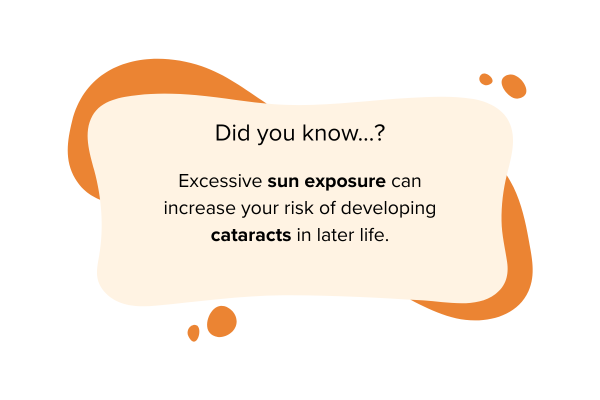
Another health risk to not wearing eye protection is cataracts, which is when the lens of your eye clouds, causing blindness over time.
While all that might seem a tad overdramatic, these are very real risks, even in perpetually gloomy Britain.
The reality is that UV damage is one of the biggest causes of cataracts and mascular degeneration which cause sight loss. Loss of sight currently affects a third of people of 65, and you can reduce that risk by getting into the habit of wearing eye protection.
So while you may feel fine now, regularly skipping the eye protection could lead to long-term damage you’ll feel in the future.
Protection from environmental hazards
The sun isn’t the only thing you want to keep out of your eyes. Whether you’re a city jogger or like to run on more natural routes, environmental hazards are all around us.
Wind, dust, pollen, insects, or other debris could hit you when you least expect it, causing discomfort, pain, or even blocking your vision.
The biggest risk is damage to your corneas. Corneal abrasions are scratches or grazes to the eye’s outer layer which can cause discomfort, pain, redness, a feeling of grittiness, or even blurred vision. While most minor abrasions can heal on their own, you can skip that trip to the ophthalmologist altogether with the right eye protection.
Improved visual clarity
Another major benefit of wearing running sunglasses is better vision in different conditions.
Glare is the biggest enemy to your visual clarity. It bounces off reflective surfaces like roads, water, and windows and makes it more difficult to make out details ahead of you.
But sunglasses can reduce or even cut it out completely.
Sunglasses can also give you better depth perception by enhancing contrast, which makes them particularly handy at spotting hazards when running on uneven terrain.
Reduced eye strain and fatigue
There’s no need to make going for a run any more challenging or uncomfortable than it needs to be. And unnecessary fatigue or eye strain is just going to sap your energy and take you further away from that runner’s high.
You might not register that your eyes could be the culprit here, but think about it. If you’re squinting heavily while running in bright conditions, trying to see past a sudden flood of glare, it’s no surprise that you end up more tired or nursing a headache afterwards.
The simple fix is to get used to wearing sunglasses when you go out. You might be surprised at the difference it makes, even if it’s not as bright out as you think.
What to look for in running sunglasses
Sunglasses for runners are essential in our book, but how do you pick the right ones? Look out for these features while shopping for your next pair.
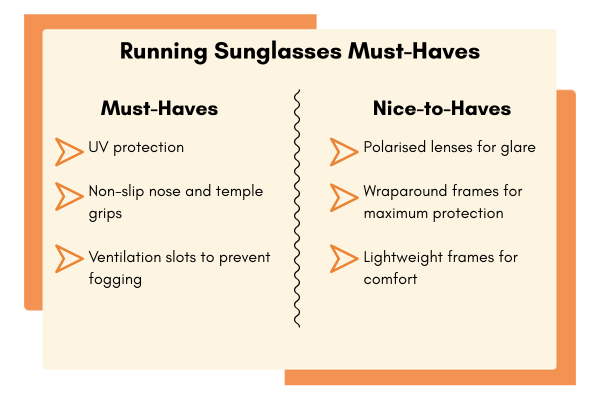
Lightweight frames
Whether you’re training from a marathon, prefer intense sprints, or gentle evening jogs, all runners should look for lightweight sunglasses. They’re more comfortable for longer runs so you’re less likely to even notice you’re wearing them after a while.
Non-slip nose pads and temple grips
One of the biggest reasons runners avoid wearing sunglasses is because they move about. No one wants that.
But with running sunglasses, most will come with non-slid nose pads and temple grips to keep them firmly in place. That’s why we always recommend going with a pair of sports sunglasses rather than regular ones, because they’re much more likely to have grips built in.
Wraparound frames
They might not be 100% necessary but some serious runners prefer the wraparound style of sunglasses for running. The main benefit is greater protection around your eyes from the sun, rain, wind, and debris from all angles.
UV protection
If you look for nothing else in particular, always make sure your sunglasses have UV protection.
Surprisingly, not all sunglasses come with this, especially if you pick up a pair of cheap fashion sunglasses. Sports sunglasses, on the other hand, are more likely to have the protection you need. But always check first.
Polarised lenses for glare
Polarised lens technology is favoured by a lot of athletes because of its ability to drastically reduce glare. This tech, which typically involves treatment with a special chemical, keeps your vision clear in bright sunlight.
The biggest pro, other than clarity, is that polarised lenses reduce the risk of eye strain that even most sunglasses struggle to block entirely.
Transition lenses for changing conditions
If you’re going to be out and about in changing light conditions (e.g. sunny to cloudy or in and out of the shade), you might prefer transition lenses. These will automatically adjust the tint according to the light around you. They’ll become clear in low light and darken when the sun hits the lenses.
They’re a popular option for those with prescription glasses, as you get the bonus of having a pair of glasses and sunglasses all in one.
Ventilation slots
Ventilation slots can help you avoid the risk of sunglasses fogging up while you’re out on a jog – a pet peeve many runners have. Most regular sunglasses won’t have ventilation built into them. But sports sunglasses for runners are designed to encourage clear airflow around your glasses to minimise it.
Prescription lenses
With many brands now offering prescription options, you won’t have to make the tough choice between seeing clearly with your regular pair and seeing clearly in the sunlight.
Some popular brands that offer prescription lenses for sports include Bolle, which offers sunglasses for running, cycling, skiing and more.
Lens tints for running
Your choice of sunglasses tint isn’t just about how they look. Some tints are best for enhancing contrast and clarity, whereas others are better suited to glare.
In our recent breakdown of sunglasses tints, we explained why grey, brown, or yellow-tinted sunglasses are usually best for running.
Are sunglasses for runners worth it?
We’re biased, of course, but yes, running sunglasses are well worth the investment if you run regularly.
Eye protection is often overlooked by runners. But no matter the weather, good sunglasses can protect your eyes, comfort, and long-term health.
It doesn’t matter whether you’re a serious athlete training for a marathon or just trying to look after your health with the occasional jog. Protecting your eyes means there’s one less thing on your mind while your feet are hitting the pavement.
Fewer distractions let you focus on what really matters, whether that’s your health and wellbeing or hitting a personal best.
Looking for your next frames? Browse our running sunglasses today from brands including Nike, Adidas, and Bolle.