

When packing for your next skiing trip, one of the most important things you don’t want to leave behind is eye protection. But skiers face a dilemma: should you pick up sunglasses or goggles for skiing?
Goggles have long been the classic choice skiers but many now prefer the versatility and style of sunglasses. They’re less bulky, they can be used both on and off the slopes with drawing strange looks, and there’s usually more choice.
But do sunglasses for skiing really hold up? Can they compare to trusty skiing goggles that keep your eyes protected at all angles?
The truth is that both options have their pros and cons. So if you’re weighing up what to buy before your next trip, let’s take a closer look.
Why eye protection matters on the slopes
The biggest reason is that UV rays intensify at altitudes. When you’re surrounded by snow, that UV light is reflected even on cloudy days.
In fact, for every 1,000 metres of altitude, UV intensity jumps by around 10%.
The biggest risks are sunburn, which can lead to an increased risk of skin cancers, and long-term damage to your eyes. Intense sunlight can cause sunburn on your corneas or even an increased risk of cataracts later in life.
If you’re a regular skier, those risks snowball (to pardon the pun) over time.
Aside from sun damage, you’ll also want to think about protecting your eyes from the wind and debris too. Anything that might affect your vision is potentially dangerous when whizzing around in the snow. So, wearing sunglasses or goggles for skiing is a no-brainer to ensure safety and comfort.
Ski goggles: The traditional choice
Pros of ski goggles
Ski goggles are probably what you imagine if you’re picturing a skier. There’s a good reason why they’re still a popular choice even when there are alternatives out there.
Complete weather protection
You can’t really beat skiing goggles when it comes to protection. Covering your entire eye area, there’s no chance for wind, snow or debris to get anywhere near them.
Wide field of vision
With full coverage over your eyes, ski goggles give you a wider field of vision that you might not find in a pair of sunglasses (even wraparound types).
Impact protection
Ski goggles are designed to be able to take a hit. Even the pros out there might find themselves skipping and falling over at some point. So if you’re worried about damage (both to yourself or your gear), goggles are a safe bet.
Compatibility with helmets
All ski goggles are designed to sit comfortably under helmets, so you won’t have to worry about anything digging into the side of your head when you gear up. With sunglasses, you might find a fit that works well with your helmet a little trickier.
Cons of ski goggles
Bulky
Goggles are naturally a lot bulkier than sunglasses, which can make them trickier to store when heading to the slopes.
No multi-usage
Ski goggles aren’t exactly multi-use. If you want eye protection that works well in other sports, then goggles probably aren’t the best option. You might get a few strange looks if you don a pair of goggles on your next run, for example.
Less secure without a helmet
Helmets help to keep goggles in place and are designed to fit close to the back of the head with a thin band that the helmet sits over. If you’re not wearing a helmet, this can slip down, though we’d recommend always having your helmet on if you’re skiing anyway.
Fogging risk
While many ski goggles are built with anti-fogging features such as ventilation slots and coatings, there’s always a greater risk of fogging when compared to sunglasses.
They may feel claustrophobic
Goggles might not bother everyone, but some find them a bit more claustrophobic to wear because of how snugly they fit over your eyes. Sunglasses give you a bit more breathing room and are easier to take off when you need to. Some people also find they’re too hot to wear in bright sunlight, which can also create fogging issues.
Sunglasses for skiing: The lightweight alternative
Pros of Ski Sunglasses
More breathable
Sunglasses will have better ventilation naturally, which can reduce issues of fogging or overheating when compared to goggles.
Lightweight
With smaller designs, sunglasses are generally more lightweight, which you might find more comfortable if you’re on the slopes all day.
Easier to store
Smaller and lighter, sunglasses are easier to stow away in a pocket or bag when moving around, keeping your hands free for your skis and helmet.
Versatile
Depending on the style you prefer, you’ll likely find that ski sunglasses are better suited to other scenarios and sports.
More stylish
Some skiers simply prefer the look of sunglasses compared to big, bulky goggles.
More budget-friendly options
You may find that there’s more choice out there at different price points if you’re looking to save a bit of money. Skiing goggles tend to be more expensive with fewer style options to choose from.
Cons of ski sunglasses
Less weather protection
While ventilation is a big pro for sunglasses, it’s also the very reason they offer less protection against the elements. Wind, snow, rain, and bright sunlight could all affect your vision if you’re missing out on the full protection that goggles offer.
Helmet compatibility
Not all sunglasses are going to sit comfortably when you add a helmet into the mix. Sunglasses may cause some discomfort if the helmet presses your frames into the side of your head.
Risk of losing them
Without the head strap that goggles have, sunglasses have a higher risk of getting lost in extreme weather or during a fall. And with a smaller design, it might be a bit harder to find them afterwards, especially if they drop out of your pocket when you don’t notice.
Less durable
In the event of a dreaded fall, sunglasses are probably not going to fare as well as a sturdy pair of goggles.
Not suitable for more extreme conditions
Sunglasses may not be suitable in more extreme weather if you end up in heavy snowfall while skiing. Gaps around the sides could let snow or high winds get into your eyes which can affect your vision. There’s also a risk of them slipping or blowing off in high winds because you don’t have the straps that goggles have to keep them in place.
When to choose goggles vs. sunglasses
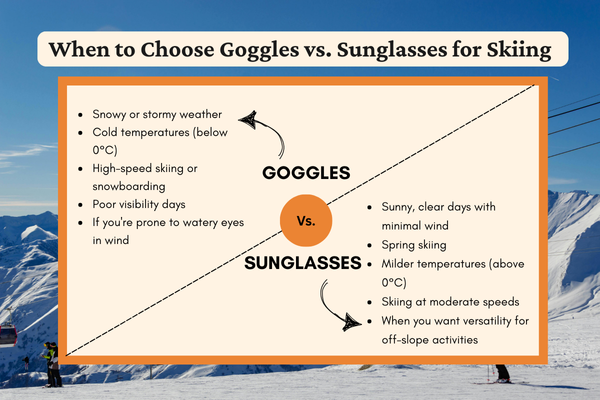
Skiing goggles are typically a better option when conditions are more severe. Cold temperatures, snowy or stormy weather with poor visibility make goggles unbeatable in terms of protection. Even if weather is mild, goggles are a great option for those who have got a taste for high-speed or extreme skiing to prevent getting watery eyes in the wind.
Skiing sunglasses are more suitable when conditions are a little better, for example, spring and summer skiing when things are a bit warmer. Sunglasses hold up fine as long as you’re not into extreme skiing where wind becomes a problem. So if you’re a leisurely skier or want a pair of glasses that suit you both on and off the slopes, we’d say go for skiing sunglasses over goggles.
Key features to look for in ski eyewear
UV protection: Minimum UV400, ideally 100% UVA/UVB protection. We say this one is a non-negotiable for anyone looking at eye protection!
What to look for in skiing sunglasses
Polarised lenses: An optional feature, but worth considering to reduce glare in brighter conditions.
Impact resistance: If you take a fall on the slopes, you’ll want robust sunglasses. Look for ANSI Z87.1 or EN174 certification for maximum impact resistance.
Fit and comfort: Consider how your sunglasses will fit with your helmet while still being secure and comfortable. Rubber nose pads and temple grips will also prevent your glasses from slipping.
Wraparound design: To ensure maximum coverage, many skiers prefer wraparound sunglasses design.
Lightweight frames: Lightweight materials like TR90 or titanium can make your glasses more comfortable.
Suitability for other uses: If you’re planning to buy a pair of sunglasses that’s good for multiple uses, consider the pros and cons of other sports before buying a pair.
What to look for in skiing goggles
Polarised lenses: To reduce high glare on sunny days.
Ventilation system: Because goggles aren’t as naturally breathable as sunglasses, check for built-in ventilation to prevent fogging.
Interchangeable lens system: If you’ll be skiing in different weather conditions, an interchangeable lens system lets you switch out to a more suitable one. Not all goggles will come with this feature.
Prescription options: For prescription glasses wearers, consider over-the-top goggles that work with your existing glasses or prescription skiing goggles.
Lens tints: Yellow/amber for low light, dark tints like grey or brown for bright sun.
Lens tints for skiing sunglasses or goggles
When faced with bright sunlight bouncing off the snow, your choice of lens tint matters.
For bright conditions, the best lens tints to pick are darker ones like dark grey, brown, or even dark rose-coloured glasses. These tints help to deflect glare while also helping to boost contrast, which helps over uneven terrain.
Low-light conditions make amber, yellow or a lighter rose lens the best options. These tints let more light in but also help to enhance contrast.
For a happy medium that’ll work well in both types of conditions, you may want to go for a medium tint like a brown, copper, or rose. Your best option will depend on the typical conditions you like to ski in and the time of year.
Read more about the best sunglasses tints for different sports in our blog post, How to Pick the Best Sunglasses Tint for Sports.
Ski goggles or sunglasses for prescription lens wearers
If you’re a prescription lens wearer, you may wonder whether to go down the route of getting prescription sunglasses for skiing or goggles.
You have a few options to choose from. With goggles, you could look for ones that are suitable for wearing over the top of your regular sunglasses. Some goggles may even let you use prescription inserts.
Sunglasses are probably going to give you more options because of the range of prescription sunglasses on the market.
Goggles vs. skiing sunglasses: The best option for you
There’s no single right answer. Both skiing sunglasses and goggles will offer great protection, and the decision will come down to a combination of personal preference, budget, and your top priorities for eyewear.
The most important thing to look for is proper UV protection to make sure your eyes are fully protected.
To find you next pair of skiing sunglasses, browse our collection today, featuring brands including Adidas, Bollé, and Nike.