
Poor eyesight while playing outdoor sports is no way to hit your personal best. So you have two choices: wear contacts or get prescription sunglasses for sports.
Whether you’re playing competitive sports or just trying to get better than past-you, your choice glasses or contacts can impact your performance more than you might think.
Usually, it’s usually an easy choice. Just go with whatever you’re comfortable with.
But if you also play sports, the decision becomes a bit trickier. Will sunglasses get in the way of sports? (Spoiler: not if you get sunglasses for sports specifically).
Adding movement into the mix may have you reaching for contact lenses for convenience. But prescription sunglasses for sports specifically can offer more than just vision correction.
We’ll explore whether you should use contact lenses or prescription sunglasses for sports, looking at the pros and cons for both.
Pros and cons of wearing contact lenses for sports
Pros of contact lenses
Undisrupted field of view
The biggest benefit of contact lenses is the same whether you’re playing sports or not. You don’t have to wear anything on your face that might block your field of view. Even slim frames give you a bit of a blind spot. And while you’re playing sports, that could make it harder to spot things like uneven terrain or flying objects in ball games.
No fogging
Any glasses wearer will tell you that fogging lenses are possibly the most annoying part of wearing glasses.
Fogging glasses are common when playing sports because of the changes to body temperature and breathing rate. But if you’re moving around fast and can’t clearly see ahead, then that’s a big safety issue. With contact lenses, there’s no danger.
Comfortable with helmets/other accessories
If you need to wear a helmet, for example in skiing or cycling, wearing glasses can be uncomfortable. The frames can dig into your temples and distract you from focusing on your performance. Contact lenses won’t ever get in the way of other protective gear.
Cons
No protection from UV rays
Contact lenses aren’t going to protect your eyes from UV light which can affect your long-term eye health. So, if you’re out in bright sunlight, they’re not really a suitable alternative to wearing eye protection. You’ll probably have to don the sunglasses anyway.
No protection from dust, wind or debris
For fast-moving sports like cycling, mountain biking, or running, you’ll dust, wind, and even flying debris could get into your eyes.
Pain, irritation, watering or even dry eyes are all distractions that can throw you off so it’s always best to protect your eyes with sunglasses or goggles.
Discomfort
If you’re not used to wearing contact lenses, you might find them uncomfortable at first. A common issue for contact lens wearers is dry eyes, which can get worse if you’re playing sports in windier conditions without eye protection.
Maintenance
Once the contact lenses are in, there’s not much to think about. But there’s always some degree of maintenance involved, such as cleaning and storing the lenses hygienically. Sunglasses might need a clean every now and then, but are easier to maintain overall.
Why choose prescription sunglasses for sport?
UV protection
Let’s start with the obvious benefit of wearing sunglasses for sport: UV protection. Over time, UV rays can damage your eyes and even contribute to the development of cataracts or other eye conditions in later life.
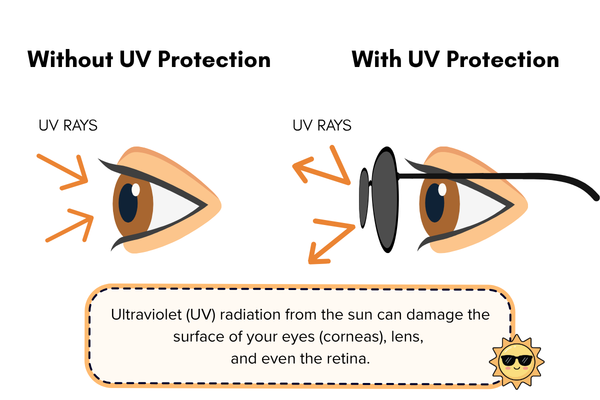
If you’re spending a lot of time outdoors, proper sun protection is a must. And that’s something contact lenses alone can’t really help you with.
Impact resistance
Sunglasses give your eyes protection not just from bright sunlight but also wind, debris, bugs, and things like branches if you’re hurtling down a nature trail. Even if you’re wearing contact lenses, it’s always worth adding that extra layer of protection with sunglasses.
Improved vision clarity
In bright sunlight and glare, details are harder to make out (even with some sunglasses). Sports like fishing, sailing, skiing, golf, or road cycling all face glare issues as sunlight bounces off different surfaces. But if you get a pair of sunglasses with polarised lenses, you can dramatically reduce glare and improve your vision clarity.
In some environments, the tint of your lens can also enhance more important details that help you see at your best.
For example, pink or purple-tinted lenses can help to dull the colour green, which can help you spot details in the distance on a golf course. Contacts alone won’t be able to do that.
Read more: How to Pick the Best Sunglasses Tint for Sports
What to consider before buying
What sports are you playing?
Whether you go for glasses or contacts will partly come down to your sport of choice. If you’ll be playing contact sports with a lot of impact, then contacts might be a safer pick since you won’t have to worry about them moving or shattering.
If you’re planning a cycling trip that will have you battling the elements for long stretches, then prescription sunglasses are going to offer that extra protection for your eyes.
Environmental conditions
Think about the environment you’ll be facing. Will you be up snowy mountains with high glare and wind to contend with? Or are you expecting low light conditions for evening runs?
What if you’ll be doing sports indoors? Contacts are an easy choice if you’d rather not wear glasses. For more protection, try clear lens sports sunglasses. Many Wiley X sunglasses have a quick interchangeable lens system that lets you swap between clear lenses and darker tints.
Personal preference
Perhaps the hardest thing to account for is personal preference. Some people prefer to avoid wearing glasses because they simply don’t like the feeling. Others might prefer a bit of extra protection when out in the elements all day.
Whether you go for prescription sports sunglasses or contacts will also come down to what you prefer in everyday life.
If you’re a glasses wearer, then getting sports sunglasses with prescription will be a no brainer. If you’re more of a contacts person, then you might prefer just a regular pair of sports sunglasses.
Either way, we’d always recommend getting a pair of sports sunglasses that come with built-in grips to keep them stable during movement. Regular sunglasses are more prone to slipping which can be distracting.
Costs
The cost of sunglasses vs. contacts is a little trickier to determine. With sunglasses, you have a one-off cost of getting them made with prescription lenses. However, as your prescription changes over time, you may need new ones in the future.
With contacts, it’s typically a smaller cost upfront but those costs are ongoing since you’ll need replacement lenses and equipment to clean them.
Which is right for you?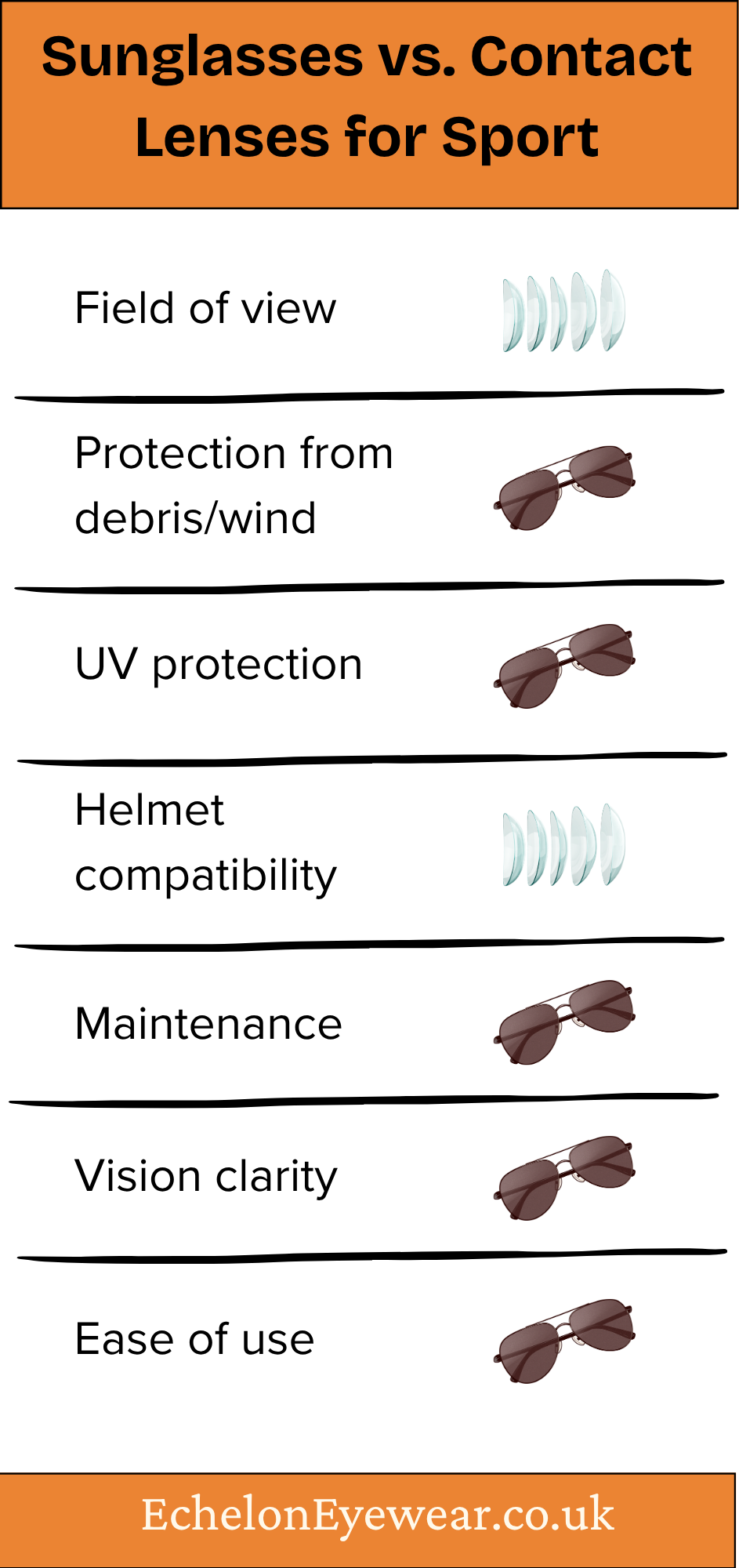
Contacts are great in that they correct your vision subtly enough that you won’t need to think about it once they’re in. There’s no worrying about fogging lenses or having to keep them clean. And if you head out into sunny conditions, you can simply pop on a regular pair of sunglasses.
Prescription sports sunglasses offer a 2-in-1 benefit of correcting your vision and also protecting your eyes. For those who can’t wear contacts, this is the simplest solution for athletes with eyesight issues.
Looking for your next pair of sports sunglasses? Check out our range today. We also offer prescription sports sunglasses from Bolle, Wiley X, and Maui Jim. Order your custom pair today.