
Sunglasses aren’t just a fashion accessory for the summer. Sunglasses protect your eyes, one of the most sensitive parts of your body, from injury and long-term damage.
Below, we take a closer look at how sunglasses work, what they can help you avoid, and how different types of sunglasses work. Plus, we cover how to choose sunglasses for sports to keep you focused, comfortable, and at the top of your game.
The risks of UV light
Ultra-violet light is a type of radiation that makes up about 10% of the electromagnetic radiation from the sun.
The human eye blocks most UV light, but the photoreceptors of the retina are sensitive to UVA photons. While the amount of UV light that penetrates the atmosphere lessens under cloud cover, it can still reach your eyes and cause damage.
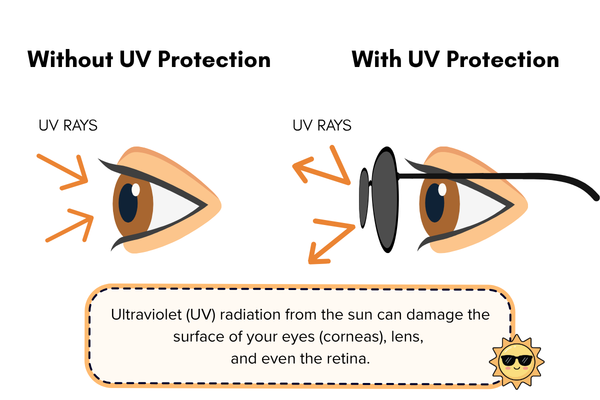
These UV rays can cause damage to your eyes and several short and long-term conditions.
Potential risks of sun damage to your eyes:
Photokeratitis
Most people don’t realise you can get sunburned eyes but that’s exactly what photokeratitis is. The sun damages the cornea and the inside of your eyelids causing pain, redness, watery eyes, a gritty sensation in your eyes, swelling, and blurred vision.
The symptoms of photokeratitis usually disappear within 24-48 hours but it’ll be an unpleasant wait. The longer you’re exposed to UV light damage, the worse the symptoms and recovery time will be.
Photokeratitis is sometimes also called snow blindness. Skiing lovers are more likely to develop it because of the highly reflective surface of snow.
Cataracts
Cataracts are when the lens of your eye becomes cloudy, causing blurred vision and vision loss. These take years to develop but prolonged exposure to harmful UV rays can increase the risk of developing cataracts in later life.
Pterygium
Sometimes called “surfer’s eye,” pterygium is a growth on your eye’s conjunctiva (the white part of your eye). It typically starts in the corner of your eye and grows outwards, looking white or pink with visible blood vessels.
It’s called surfer’s eye because surfers are more likely exposed to the elements – sun, salt, wind, and sand. But anyone can get it with prolonged exposure to the sun.
It’s not a cancerous growth and won’t spread to other tissues but it can damage your vision if not treated by surgery.
If you’re a surfer or regularly do other water-based sports, this is one to be careful of. Make sure you always have eye protection.
Eye cancers
While less common, sun damage over the long term can increase your risk of developing eye cancers. There are several types that vary in symptoms and treatments. Wearing sunglasses throughout your life is one way to avoid this risk.
The impact of bright sunlight
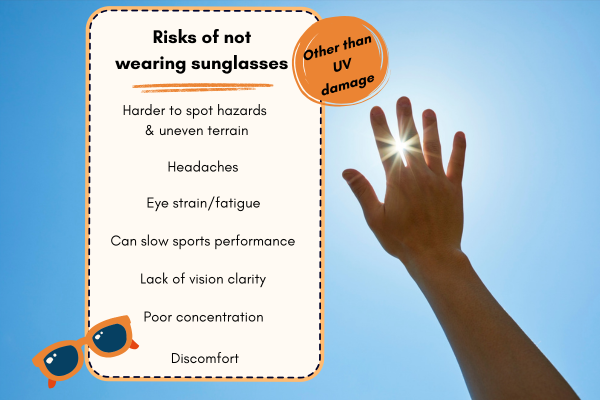
While the effects of sun damage to your eyes isn’t always immediate, there are other side effects of going without sun protection. Sunglasses protect your eyes from more than just long-term damage.
When you’re squinting in bright sunlight, you can experience eye strain, which can cause headaches and fatigue.
Bright sunlight can also impact your clarity of vision and therefore concentration and your ability to spot hazards. If you’re doing fast-paced sports like mountain biking or trail running, sunlight can prevent your ability to see uneven terrain or other hazards that could cause injuries or accidents.
Anything that impacts your concentration during outdoor sports is going to take a toll on your performance too. So you might be at a disadvantage in competitive sports if you don’t have the right eye protection.
Learn more: How to Protect Your Eye Health
When is UV light most dangerous?
UV light is at its most dangerous:
- Around midday when the sun is at the highest point in the sky
- At high altitudes
- In open spaces with no shade
- In highly reflective environments, e.g. snow, water, wet roads, sand
Not just in the height of summer.
And yes, even on overcast days. Even if it’s not particularly sunny outside, UV radiation is still beaming down on us.
While it may seem strange to wear sunglasses in the middle of autumn or winter, it’s also the best way to protect your eyes all year round.
How sunglasses categories work
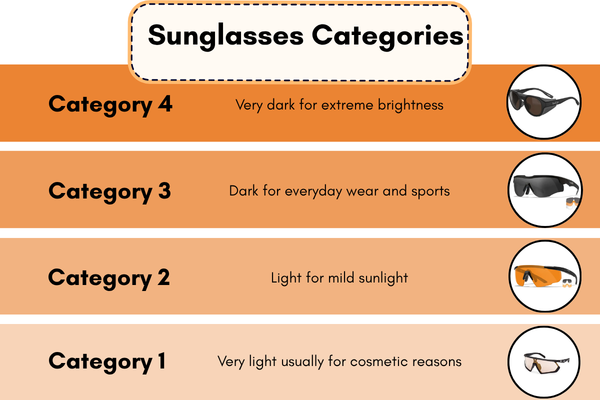
Sunglasses come in one of 4 different categories. But what do they mean?
- Category 1: Very light tint (usually for cosmetic reasons)
- Category 2: Light tint (for mild sunlight or indoor use)
- Category 3: Most sunglasses fall under this category. Ideal for bright sunlight and everyday wear.
- Category 4: Very dark for extreme brightness or highly reflective environments like snow or water. Not suitable for driving.
Sunglasses with photochromic lenses work by transitioning the level of tint from light to dark – usually category 2-3.
Learn more: What Do Sunglasses Categories Mean?
How lens colours affect protection
Lens colours aren’t only a cosmetic choice. They can affect your comfort, vision, and how well sunglasses protect your eyes.
Grey/black: The most popular lens tint provides a good level of glare reduction and accurate colours.
Brown: Sometimes called ‘amber,’ brown-toned lenses are ideal for bright light but less so in low-light conditions. Brown lenses can enhance depth perception, colour and contrast.
Green: Green is a less popular but useful option thanks to its contrast and colour perception. It can work well in both low and bright sunlight.
Blue/purple: This tint can work well at reducing glare and even low-light conditions like fog. It’s less common in regular sunglasses but works well in water and snow sports. Not suitable for driving since it distorts colours on traffic lights.
Red/rose: Red-toned sunglasses can enhance contrast and detail in bright light. It also blocks blue light. Not suitable for driving since it can distort colours.
Orange/yellow: Sometimes described as ‘rust,’ these lighter colours help to improve visibility in low light. These tints will improve depth perception but may distort colours.
How different styles of sunglasses protect your eyes
The style and shape of your glasses can also affect the level of protection you get.
Most sunglasses have a flaw – they only protect you from the front, leaving sometimes wide gaps at the sides and overhead.
Oversized sunglasses offer great coverage, but wraparound sunglasses are one step further as they protect your peripheral vision too.
Overhead coverage isn’t something that sunglasses protect your eyes from typically, which is why wearing a hat is recommended.
What lens features should I look for?
Nowadays, there are so many options to consider when shopping for sunglasses. Each brand now seems to have its own type of polarisation or optical clarity technology, and it can all get confusing.
UV protection
This is the gold standard you should be looking for when shopping for new sunglasses. Look for glasses that state they have 100% UVA/UVB protection as this is what’s most harmful to your eyes.
Everything else bar this, is optional.
Polarisation
Polarisation cuts out horizontal glare bouncing off flat surfaces like roads, water, snow, or sand. The main benefit of this is comfort, but reducing glare can also reduce things like eye strain which can cause headaches.
One downside is that polarised lenses make it difficult to see LCD screens, which may be an issue if you need to see a Sat-Nav or smart devices.
Another is that polarisation can affect depth perception and make spotting details more difficult. It’s something that golf enthusiasts in particular have trouble with as it makes it harder to read the course.
Learn more: Polarised vs Non-Polarised Sunglasses: Which is Best?
Photochromic lenses
Transition or photochromic lenses alter the darkness of the lens as light changes.
Most photochromic lenses go from category 1-3 (clear to dark).
Photochromic lenses are particularly useful for prescription glasses wearers because you can go from a regular indoor pair to sunglasses without having to switch. However, the kind of glasses you want for seeing clearly in general might not offer a great level of coverage as sunglasses.
Learn more: Are Prescription Transition Glasses Worth It?
Anti-reflective lenses
Anti-reflective lenses typically come as a coating applied to the surface of the lenses. It works by changing the way light interacts with the lens to reduce reflections and glare.
One downside to anti-reflective coatings is that it can be difficult to avoid scratches and smudges when cleaning or during everyday use.
Mirrored lenses
While sometimes a simple fashion choice, mirrored lenses also have some practical benefits. Glare reduction is the main one as these lenses prevent too much light from getting into your eyes.
One downside is that they’re prone to scratching which can affect the look and comfort of wearing them.
Prescription lenses
If you need prescription sunglasses, the good news is that they typically come with UV protection as standard.
Many also come with additional options since they’re custom made to your prescription, including polarisation, photochromic, and coatings like anti-fog and anti-reflection.
We partnered with Bolle and Wiley X to offer a wide range of prescription sunglasses for sports and everyday wear. Browse our collection of prescription sports sunglasses today to find your custom pair.
Learn more: Should You Buy Prescription Sunglasses Online?
How to choose the best sunglasses for UV protection
The biggest thing to look for is UV protection for any sunglasses you’re considering. Avoid buying fashion sunglasses that don’t clearly state that they’re UV-protected.
After this, the rest is largely down to personal preference and budget. If you’re buying sunglasses for sport, then we’d recommend you take a look at some of our buying guides on different sports including golf, running, skiing, and cycling.
For maximum comfort, some kind of glare reduction is recommended, whether that be polarised, mirrored, or anti-reflective lenses.
What sunglasses for sports should you choose?
If you’re wearing sunglasses for sports, we’d recommend researching what tints, styles, and lens technology works best for your sport of choice. Sunglasses protect your eyes as long as they’re UV protective, but the right sunglasses will make you more comfortable, competitive, and focused on your gains.
For example, something like skiing will benefit from a high category lens type (3-4) with grey, blue, or purple tints. But we’d avoid photochromic lenses in cold conditions because the cold can affect how quickly the lenses transition.
On the other hand, for golf, you can go for a lighter lens in colours like grey, brown, or rose-toned glasses, which help with depth perception and detail.
To benefit from maximum protection, we’d recommend wraparound sunglasses for sports like skiing, cycling, or in bright, windy conditions.
Browse our range of sports sunglasses for golf, skiing, water-based sports, cycling, and running to find your perfect pair.